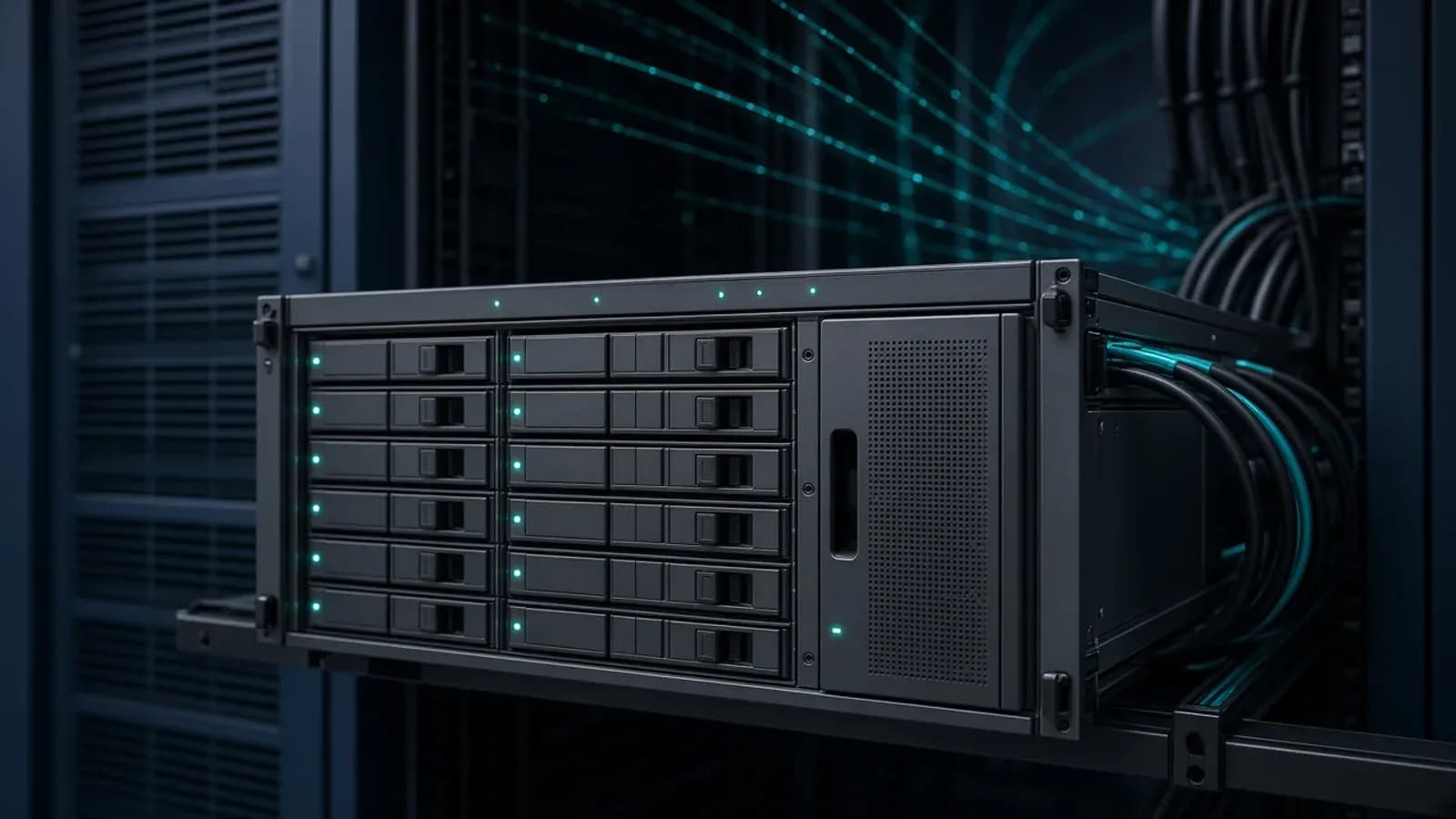
Dell Data Domain earns Veeam Primary Target certification — simpler backup and faster recovery
Dell PowerProtect Data Domain has passed the Veeam Ready Repository – Primary Target certification. On the tested configurations it can be the primary repository for Veeam Backup & Replication, and Instant VM Recovery can start directly from backups on Data Domain.
Source: Veeam
On 2 November 2026 Veeam published Veeam Ready certificate 3024 for the Dell PowerProtect Data Domain series, in the category Repository – Primary Target. On 6 November it explained the certification on its blog; the post was updated on 12 November. Primary Target means compatibility and performance tests for backup and restore, including Instant VM Recovery. The certificate covers a primary repository, not only secondary or long-term retention storage.
What the test covered
The test ran on a DD3410 with DDOS 8.8: 10 × 8 TB HDDs for backup data, a 1.92 TB SSD for cache, 25 GbE Ethernet and RAID-6-equivalent protection pools. The lab used Veeam Backup & Replication 13.1.2.57.
Veeam says the result covers the DD3410 and higher models in the current line and, on the certificate page, configurations with specifications equal to or greater than the system under test. Veeam Backup & Replication 13.1.2 or later is required. DDOS 8.8 is the tested version, not a stated minimum for every installation.
Why a second disk tier existed
Veeam environments with Data Domain often kept faster disk for recovery and Data Domain for retention. In the 6 November article Veeam recalls KB2660 from 2019: random reads during Instant VM Recovery were often slow on fully deduplicated data stored on HDDs. KB2660 itself (“Performance Impacts of Deduplicated Storage Systems”, published 22 January 2019, updated 29 April 2026) covers deduplicated systems in general, not Data Domain alone.
What Dell and Veeam changed
Dell reworked DDOS reads so restore traffic is not treated like a sequential backup write. Metadata can live on flash, while backup data stays on HDDs. Veeam added DD Boost transfer, an Instant Recovery engine shaped for that storage, a RAM block cache, prefetch and automatic repository settings.
According to Veeam, primary backups can go straight to Data Domain and Instant VM Recovery can start without a separate tier. Deduplication and Retention Lock immutability stay on the same system.
The cache condition
The test used SSD/Flash for caching. Veeam notes that other cache media may reduce performance. The cache holds metadata and speeds up reads; the vendor manages its behaviour. Certification does not mean the same recovery time in every environment. Before retiring a fast recovery tier, confirm flash cache, the Veeam version and a measured recovery time.
What this means for organisations
Fewer repositories means fewer copy jobs — when the configuration meets the test conditions. This is not a promise for every older Data Domain system.
The model used in the test, Dell PowerProtect Data Domain DD3410, is in the Alterkom catalog.
Storage design and data protection are covered in Storage and data protection.
Summary
The Veeam Ready Primary Target certification of 2 November 2026 confirms that the tested Dell PowerProtect Data Domain configurations can be the primary repository for Veeam Backup & Replication 13.1.2, with Instant VM Recovery started directly from the appliance. Before retiring a separate recovery tier, confirm SSD/Flash cache and measure recovery time in your own environment.
Sources
1. Veeam Ready — Dell PowerProtect Data Domain series, article 3024 (published 2 November 2026)
Planning secure AI agents in your organisation?
Talk to Alterkom about local LLMs, access control and infrastructure for enterprise AI agents.