LAYER 1 · APPLICATION LAYER
Applications and interfaces
React · Next.js · TypeScript · Dashboards · B2B portals
User interfaces, operational applications and process management panels.
ALTERKOM / INTELLIGENT AUTOMATION
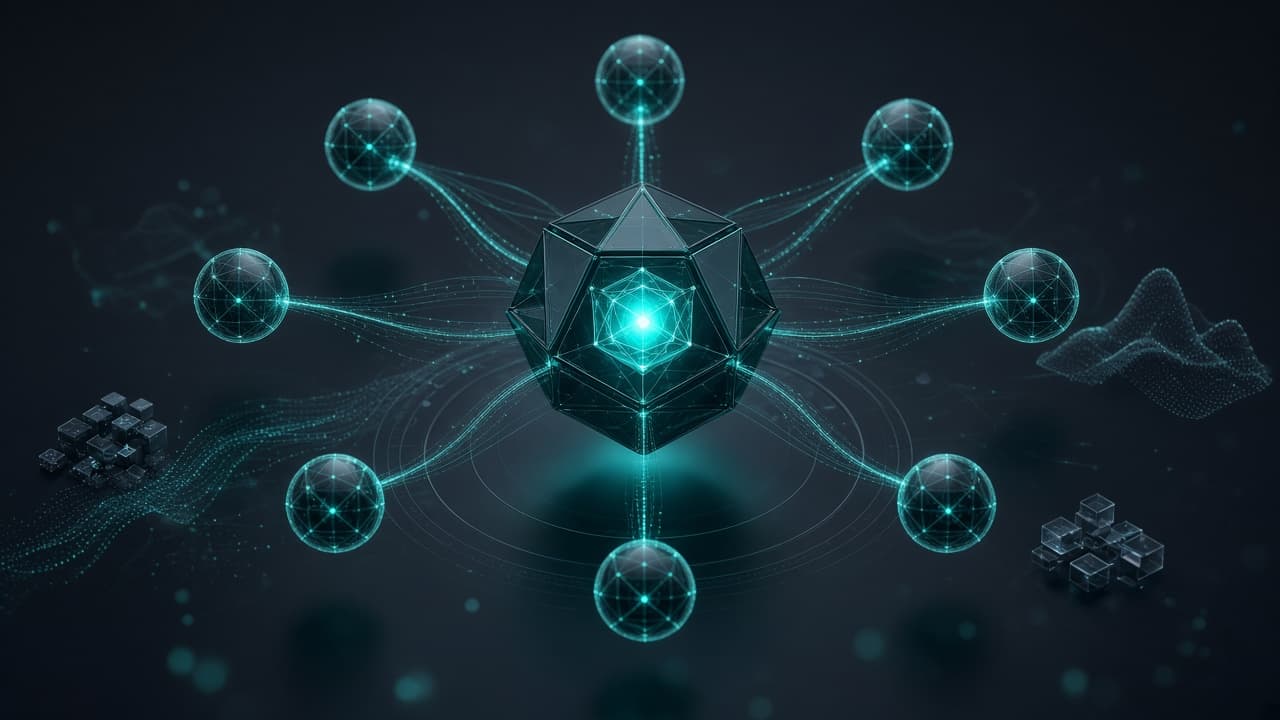
Intelligent automation. AI agents. Systems that can act. We build solutions that go beyond traditional automation. We combine AI agents, language models, n8n, Hermes Agent and our own routing mechanisms into systems that analyse information, coordinate tasks and automate business processes and IT operations. We build applications and integrations that let artificial intelligence work with existing enterprise infrastructure.
Traditional automation relies on rules and predefined action sequences. At Alterkom we extend that approach with artificial intelligence that can interpret information, analyse context and select the right tools for a task. We design and develop systems that connect workflow platforms, AI agents, local and cloud language models, and existing enterprise environments. We build our own applications and integration layers with React, Next.js, TypeScript, Python, REST APIs and Docker — so solutions fit concrete processes instead of being limited by a single platform. We focus on business-process automation, infrastructure monitoring, document analysis, agent orchestration and integration of diverse IT systems.
Eight directions where we combine automation, AI agents and software engineering.
We design AI agents that perform defined tasks using language models, tools and controlled permissions. Agents can analyse data, retrieve information, call APIs and collaborate. Depending on the process they execute allowed operations or escalate decisions for user approval.
We develop mechanisms that route requests to the right models, agents and AI services. Agent Router supports model-selection rules, adapter authentication, access management and controlled task flow across tools.
We use n8n to design workflows that connect applications, databases, business systems and AI services. We build processes with schedules, webhooks, APIs and events, including workflows that collaborate with AI agents.
We use and extend the Hermes Agent environment for complex tasks based on AI models, tools and specialised agent skills. We integrate agents with our applications and with information retrieval and processing mechanisms.
We combine monitoring data from servers, virtualisation, networks and applications with AI analysis. We develop scenarios where an agent reviews alerts and logs, identifies possible root causes and proposes actions to administrators. Critical operations require appropriate authorisation.
We design web applications for processes, agents, information and IT infrastructure. We use React, Next.js, TypeScript, Python, PostgreSQL and Docker. We deliver admin interfaces, dashboards, API backends and integration layers.
We combine OCR, AI models and process automation. Solutions can analyse technical documentation, offers and contracts, extract information and pass results to the next workflow stages.
We connect enterprise systems via REST APIs, webhooks, dedicated adapters and backend services. We build solutions that run on-premises, in Docker containers and in hybrid environments.
Four layers forming a logical stack — not a rigid execution order. Agent Router can steer workflows, and n8n can invoke an agent.
React · Next.js · TypeScript · Dashboards · B2B portals
User interfaces, operational applications and process management panels.
n8n · Hermes Agent · Workflows · Webhooks · Task Scheduling
Workflows, integrations, schedules and task execution.
Agent Router · AI Agents · Local LLM · RAG · Model Routing
Selecting agents and models, analysing information, processing context and making controlled decisions.
Python · REST API · PostgreSQL · Docker · GPU / Servers · Monitoring Systems
Backend services, data, compute infrastructure and enterprise system integrations.
We connect applications, workflows, intelligence and infrastructure into systems that can analyse data and execute tasks in a controlled way.
From a user prompt, through selecting the right agent, to data analysis and task execution.
Example: an administrator requests analysis of a server performance issue
The diagram shows a reference architecture and a target integration scenario — it does not claim the full process is already production-ready in every deployment.
STEP 1
An administrator uses a portal built with React / Next.js. Example prompt: “Check why the application server is slower than usual and prepare a diagnosis.”
STEP 2
Agent Router receives the task, verifies permissions and routes it to the appropriate agent or model.
STEP 3
Hermes Agent coordinates the analysis, selects available tools and requests diagnostic data.
STEP 4
n8n or API services run defined actions: fetching metrics, logs, alerts, CPU/RAM load and system events.
STEP 5
A language model analyses the collected data and prepares a summary, possible causes, alert assessment and recommended next steps. Model conclusions are hypotheses that require verification — not a guaranteed diagnosis.
STEP 6
The system presents a recommendation to the administrator. Configuration-changing or service-impacting operations require approval and appropriate permissions.
STEP 7
The administrator receives a diagnostic report, data sources, recommended actions and a history of performed steps.
An agent may query monitoring repeatedly or trigger further steps. Critical operations require authorisation.
Selected enterprise use-case scenarios.
AI agents analyse metrics, logs and alerts to support diagnosis and prepare recommendations for administrators.
Scheduled discovery of notices, document analysis, identification of relevant proceedings and presentation in Alterkom Market.
Routing tasks across models, agents and tools with permissions and execution rules.
Reading documents with OCR and AI, extracting information, classifying content and passing data to downstream systems.
Collecting diagnostic information, running allowed administrative tasks, analysing environment state and preparing reports.
Aggregating information from multiple sources, generating reports automatically and triggering event-based notifications.
Key technologies used in projects. We do not claim formal vendor partnerships without confirmation.
Process automation, workflows, API integrations and events.
An agent environment for executing tasks with AI models and tools.
Model and agent routing, access control and task-direction rules.
Backend services, integrations, automation tooling and data processing.
Portals, dashboards and user interfaces.
Containerisation and deployment of application components.
Storage for application data, configuration and operational information.
Natural-language analysis and use of enterprise knowledge sources.
Key outcomes for the organisation.
Automation reduces manual process handling so teams can focus on knowledge-intensive work.
AI agents can support analysis of data from many systems and prepare recommendations.
Workflows, permissions and operation history make task execution easier to control.
Combining different models, agents and technologies lets solutions evolve without lock-in to a single tool.
Existing applications do not always need replacement — new components can communicate via APIs.
Models can run on your own servers or use external services, depending on requirements.
Own products related to automation and IT operations.
Classic automation runs a fixed sequence of actions. An AI agent can analyse context, select tools and propose next steps within defined permissions.
Yes. n8n can talk to a local model through a properly exposed API or an intermediary service.
Agent Router directs tasks to the right AI models, agents or tools based on rules, permissions and task requirements.
Yes. AI models can help correlate events, analyse collected information and prepare diagnostic hypotheses. Results should be verified.
It can run operations exposed by the right tools and permissions. Potentially risky actions should be covered by approval policies, access limits and auditing.
No. Automation systems and AI agents can run on-premises, in Docker containers and on your own servers. Hybrid deployments are also possible.
We combine automation, AI agents and existing systems into solutions tailored to enterprise needs — from a single workflow to complex multi-agent environments.